


Soundbooth
2.8311.00 Reviews
App Specs
- Version
- 3.0.18
- Updated On
- License
- Free
- Downloads
- 100,000+
- Developer
- Soundbooth Theater
- Categories
- Entertainment
- Platform
- Android
Screenshots
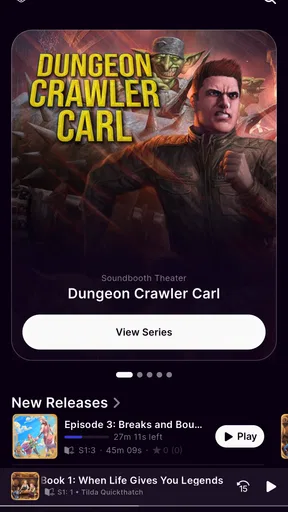
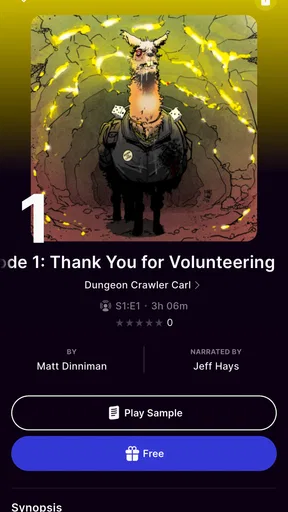
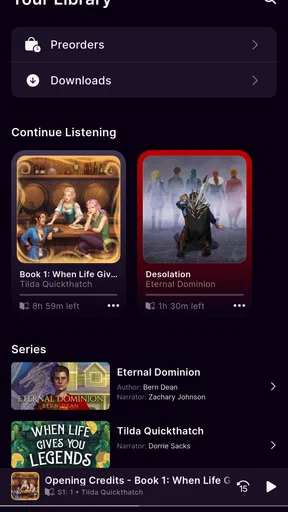
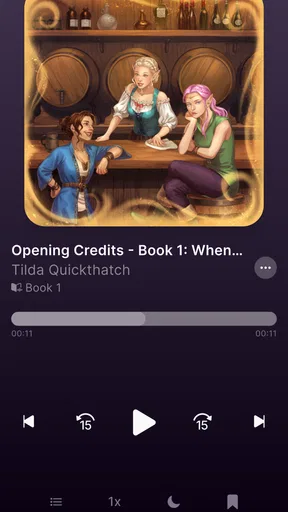
 Analysis by AppCompare
I approached Soundbooth as an entertainment app for people who want more from listening than a basic narration track. Developed by Soundbooth Theater, it focuses on audiobooks and immersive audio stories, so the appeal is less about quickly checking a chapter and more about settling into a performance. After spending time with it, I see a service with a clear creative ambition, but also one that asks you to be patient with its catalog, interface habits, and occasional friction.
The app is free to install, which makes it easy to explore without committing money at the door. It is rated for Teen users, runs on Android 8.0 or later, and has reached over one hundred thousand installs. That audience size suggests it is established enough to attract real listeners, while its average score of 2.8 from around six hundred ratings tells me that the experience is not universally smooth. I would not treat that score as a complete verdict, but I would take it as a reason to test the app personally before making it part of a daily listening routine.
How Soundbooth feels during ordinary listening
I find ordinary listening is best judged by whether the story fits the moment, not by how quickly I can browse. A short trial during a familiar walk or while doing chores helps me notice whether the performance holds my attention without demanding it. That everyday test also sets up a closer look at what to expect when opening the app and moving through its choices.
Speed expectations when opening and browsing
My first impression is that the value of Soundbooth is tied more to the listening experience than to rapid browsing. An audiobook app needs to make several things feel simple: finding a title, understanding what is included, starting playback, and returning to the same place later. When those steps are clear, I can forget about the software and concentrate on the story. When they are not, even a strong production becomes harder to enjoy.
I would approach the app with realistic expectations rather than expecting the instant, frictionless behavior of a mature music-streaming service. Audiobooks involve longer sessions, larger collections, and more deliberate choices. The best way to judge the app is not by how quickly I can jump between dozens of short tracks, but by whether I can begin a book without confusion and resume it comfortably after a break.
That distinction matters because immersive audio can encourage slower exploration. I may want to inspect a title, consider its style, and decide whether I am in the mood for a full performance. Soundbooth makes more sense in that context than as a tool for rapidly sampling content. If I already know exactly what I want and only care about immediate access, a conventional audiobook retailer or a familiar library app may feel more direct.
What happens during longer sessions
The real test is a long commute, an evening of household chores, or a quiet stretch when I want to listen without looking at the screen. In those situations, I care about continuity more than decoration. I want the player to stay out of the way, preserve my place, and make it easy to pause when life interrupts. A story with an ensemble feel can be especially engaging during repetitive tasks because the voices and sound design give my attention more texture than a plain spoken recording.
Worth Reading Before You Choose

EA SPORTS FC Mobile 26 Is a Bigger Football Game, but It Takes Time

Flipboard Shows What News Apps Must Do Beyond the Feed

Switching to Android Auto Means Rethinking Your Driving Routine

Google Calendar Makes a Crowded Week Easier to Manage

Ludo King Makes the Most of the Minutes Between Plans

Baby Panda World Brings Quick Play to Modern Phones, but Its Game Library Feels Busy
There is also a trade-off. Immersive production can make listening richer, but it can demand more attention than a simple narration. If I am working in a noisy kitchen or walking beside heavy traffic, subtle effects may disappear, while louder elements can become distracting. For that reason, I would choose a conventional narration when I need maximum clarity and an immersive title when I can give the performance a more focused listening environment.
A useful routine is to try a short listening session before planning a long one. I would start at home, adjust the volume to a comfortable level, lock the screen, and then pause and resume once. That simple test answers more practical questions than a store description: whether the controls feel natural, whether the audio suits my surroundings, and whether returning to the story feels dependable.
Heavy-use moments and resource trade-offs
Soundbooth is the kind of app I would use in concentrated blocks rather than leave open casually all day. Audiobooks naturally create extended playback sessions, and immersive audio may make me pay more attention to battery and mobile data than I would with a lightweight reading app. I would download or prepare content when connected to Wi-Fi whenever the app’s workflow allows it, especially before travel. That is not just a money-saving habit; it also reduces the chance that a weak connection will interrupt an important scene.
On an older phone, I would close unnecessary apps before starting a long session if the device already struggles with multitasking. The minimum supported Android release is 8.0, but support does not mean every compatible phone will feel equally comfortable. A newer device should generally offer more breathing room for playback and switching between apps, while an older model may expose slowdowns sooner when storage is tight or many background processes are active.
I would also avoid judging the app only by its first few minutes. A player can feel fine during a quick test and become less convenient after repeated pauses, screen locks, or changes between Wi-Fi and mobile data. The practical question is whether it remains predictable across the way I actually listen. For me, that means testing it during a commute simulation, not merely opening a title while sitting beside the router.
One non-obvious consideration is the relationship between sound design and volume. A heavily produced scene may contain quiet dialogue followed by more noticeable effects. I would listen with headphones at a moderate level first, rather than raising the volume to catch every whisper. That approach is kinder to my ears and makes it easier to decide whether the production works for my particular headphones or speaker.
Reliability, recovery, and the cost of interruption
Reliability matters more in an audiobook app than in many other entertainment tools because losing a place in a long story is genuinely annoying. If I stop listening halfway through a chapter, I need confidence that I can return without reconstructing the moment from memory. I would make a habit of pausing deliberately before closing the app, particularly after switching between devices or changing connectivity.
When something goes wrong, recovery should be calm and methodical. I would first check whether playback resumes after reopening the app, then confirm that the title and chapter still match my last position. If the app appears stuck, I would restart it before repeatedly tapping controls. Rapidly pressing play, pause, and chapter buttons can make it harder to tell whether a delay is temporary or whether the command was missed.
This is also where I would keep expectations grounded. A free app can be attractive, but the free entry point does not necessarily mean every listening choice is included without conditions. Soundbooth includes in-app purchases ranging from forty-nine cents to fifty-nine dollars and ninety-nine cents per item. I would inspect the purchase screen carefully before confirming anything, especially if I am browsing with a family member’s device or allowing a younger listener to explore.
The Teen age rating is another reason to choose content thoughtfully rather than assuming every title suits every household. A parent should look at the individual story and its tone before handing over unrestricted access. The rating gives a broad audience signal, but my own decision would depend on the listener’s age, sensitivity, and the kind of material they want to hear.
Device constraints that affect the experience
Android compatibility begins at version 8.0, which keeps the app accessible to a wide range of devices. Still, operating-system support is only the starting point. Storage, headphone quality, network consistency, and battery condition can all influence how pleasant a long audio session feels. Someone using an older phone with limited free space should be more deliberate about managing downloaded material and other large apps.
I would also think about where the audio is going to play. Bluetooth headphones are convenient, but they introduce another point of failure through pairing, battery level, and device switching. Wired headphones can be simpler for a stationary session, while a phone speaker may be adequate for casual listening but less revealing of the details that make an immersive production worthwhile.
The app is not the ideal choice for every device situation. If I need a very light experience on a low-end phone, a basic local audio player may place fewer demands on the system. If I need seamless listening across several devices, I would compare how Soundbooth fits my existing habits before moving an entire library into it. The best option depends on whether I value the distinctive production style more than universal convenience.
Another practical tip is to leave room for recovery. Before a trip, I would start a title early enough to verify that it opens and plays correctly, rather than waiting until I am already offline or boarding transport. I would also keep the phone charged and carry a backup listening option if the story is important. That may sound cautious, but audiobooks are often used in situations where restarting a download or troubleshooting a player is especially inconvenient.
What makes the app different from ordinary alternatives
Compared with a standard audiobook marketplace, Soundbooth’s strongest identity is its emphasis on immersive audio stories. A conventional audiobook often puts the narrator at the center and asks my imagination to fill in the rest. A more theatrical production can create a stronger sense of place and character through performance and sound. That difference is meaningful when I want entertainment that feels closer to an audio drama than to a book being read aloud.
The usual alternative may still be better for practical reasons. Library apps and established audiobook stores can be preferable when I want a familiar borrowing system, a broad selection, or a straightforward way to manage books I already own. A podcast app may be more convenient for short, free episodes, while an e-reader is better when I want to switch between reading and listening within the same book ecosystem.
I would choose Soundbooth when the production itself is part of the reason I am listening. I would skip it when I only want the cheapest route to a specific mainstream audiobook, when I dislike dramatized performances, or when I need a service whose organization already matches a large personal library. The app is not trying to replace every audio format; its appeal depends on whether its theatrical direction matches my taste.
Who will get the most from it
I think it suits listeners who enjoy fantasy, fiction, and other story-driven entertainment but want a more performed experience than a single narrator usually provides. It can also work well for someone trying to make repetitive chores more enjoyable. Washing dishes, folding laundry, or taking a familiar walk becomes easier to look forward to when the audio has enough character to hold my attention.
It is less suitable for people who use audio mainly as background noise while concentrating on demanding work. A rich cast or layered presentation may compete with writing, studying, or detailed instructions. In that case, a quiet narration, music playlist, or ambient app may be a better companion. I would also hesitate to recommend it as a first choice for a child simply because the app is entertaining; the Teen rating means adult supervision and title-by-title judgment remain important.
For a friend considering it, my advice would be to begin with one title rather than treating the entire catalog as a commitment. Listen in two different environments, test pause and resume, and decide whether the performance style helps you stay engaged. That small trial reveals whether the app’s central idea works for you before in-app purchases become part of the decision.
My performance verdict after weighing the trade-offs
Soundbooth Theater has a clear reason to exist: it treats audiobooks and audio stories as performances, not merely spoken files. I appreciate that focus because it gives listening a stronger sense of occasion. When the style matches my mood, I can become more absorbed than I would with a plain narration. The free installation also lowers the barrier to trying the concept, while the broad Android compatibility makes it approachable for many users.
At the same time, I would not call it an automatic recommendation for everyone. Its modest average rating, based on around six hundred ratings, points to a user experience that deserves personal testing. The purchase range means I would pay attention during checkout, and the Teen classification means I would choose titles responsibly. Older phones, unstable connections, and complicated listening habits can also make the experience less convenient than a more established alternative.
My final view is positive but selective. Soundbooth is worth trying when immersive storytelling is more important to you than a completely conventional audiobook workflow. I would recommend it to a friend who enjoys performed fiction and has a reliable Android device, while steering a library-focused listener or someone seeking the simplest possible player toward another option. Used with sensible preparation—especially testing playback, conserving connectivity, and checking purchases—it can become a distinctive entertainment app rather than just another place to press play.
Pros
- Clean interface makes browsing and editing audio feel straightforward.
- Useful tools for trimming
- mixing
- and organizing sound clips.
- Supports creative audio projects beyond basic music playback.
- Quick access to recent files helps speed up repeated workflows.
- Suitable for experimenting with sound without advanced production knowledge.
Cons
- Some features may feel limited compared with full desktop audio editors.
- Large audio projects can require considerable storage space.
- Export options may not satisfy users needing highly specialized formats.
- The learning curve increases when using advanced editing controls.
- Performance may vary on older phones or tablets.
FAQs for Soundbooth
What is Soundbooth and what can I use it for?
Soundbooth is an audio-focused application designed for creating, editing, organizing, or enjoying sound content, depending on the version available on your device. Before downloading, check its store description to confirm the exact tools included, such as recording, trimming, effects, mixing, or playback. It may be useful for casual projects, voice recordings, podcasts, music ideas, and other everyday audio tasks.
Is Soundbooth free to download and use?
Soundbooth may be available as a free download, but some features can require in-app purchases, a subscription, or a premium version. Users should review the pricing information shown on the Google Play Store or Apple App Store before installing it. Also check whether the free version includes advertisements, export limitations, watermarks, storage restrictions, or reduced access to advanced audio tools.
Does Soundbooth work on both Android and iPhone?
Compatibility depends on the specific Soundbooth app and the developer’s current release. Before downloading, verify whether it is listed for Android, iPhone, iPad, or only one platform. You should also compare the required operating-system version with your device. Older phones or tablets may not support the newest release, and certain editing features may work differently between Android and iOS.
Does Soundbooth require an internet connection?
Some Soundbooth functions may work offline after installation, particularly basic recording, playback, and local editing. However, an internet connection may be needed for downloading sound packs, synchronizing projects, accessing cloud storage, signing into an account, viewing advertisements, or completing purchases. If you plan to use it while traveling, test the main tools offline first and confirm where your audio files are saved.
Is Soundbooth safe to install and does it protect my audio files?
Download Soundbooth only from an official app store or a verified developer link, and review the permissions requested during setup. Audio applications may request access to the microphone, files, media library, or notifications, but those permissions should match the features you intend to use. Read the privacy policy to understand whether recordings are stored locally, uploaded to servers, or shared with third parties.


